
I love exploring and drawing native wildlife in the Southern Appalachian region, one of the most biologically diverse regions in the temperate world, as well as my own vegetable garden.
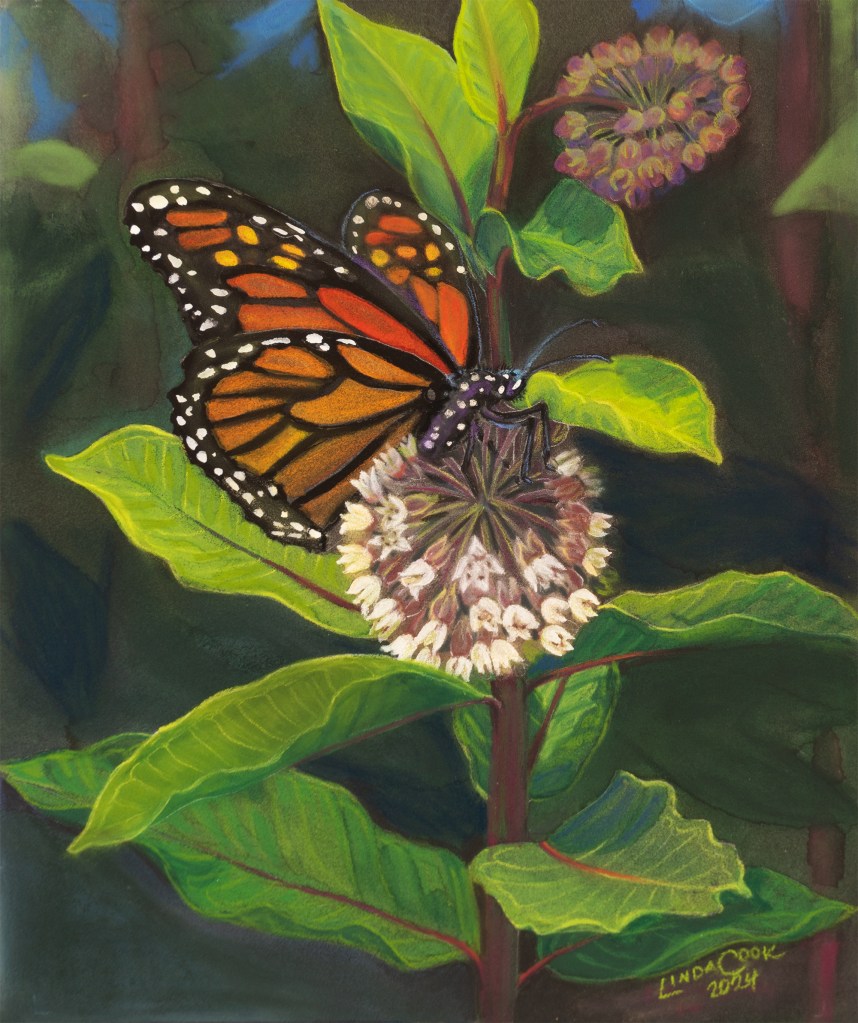

Monarch Butterfly
Monarch butterflies (Danaus plexippus) will only lay their eggs on one type of plant, and that’s milkweed (genus Asclepias). They rely on milkweed as a host plant for their larva. The caterpillars eat the leaves and milky sap and store the toxins which makes them unpalatable to many predators. Though the plant is toxic to animals and humans, it isn’t a huge problem. Since it doesn’t taste good, animals avoid it. There are many varieties of milkweed. Common milkweed (Asclepias syriaca) and swamp milkweed (A. incarnata) averaged the highest number of eggs.
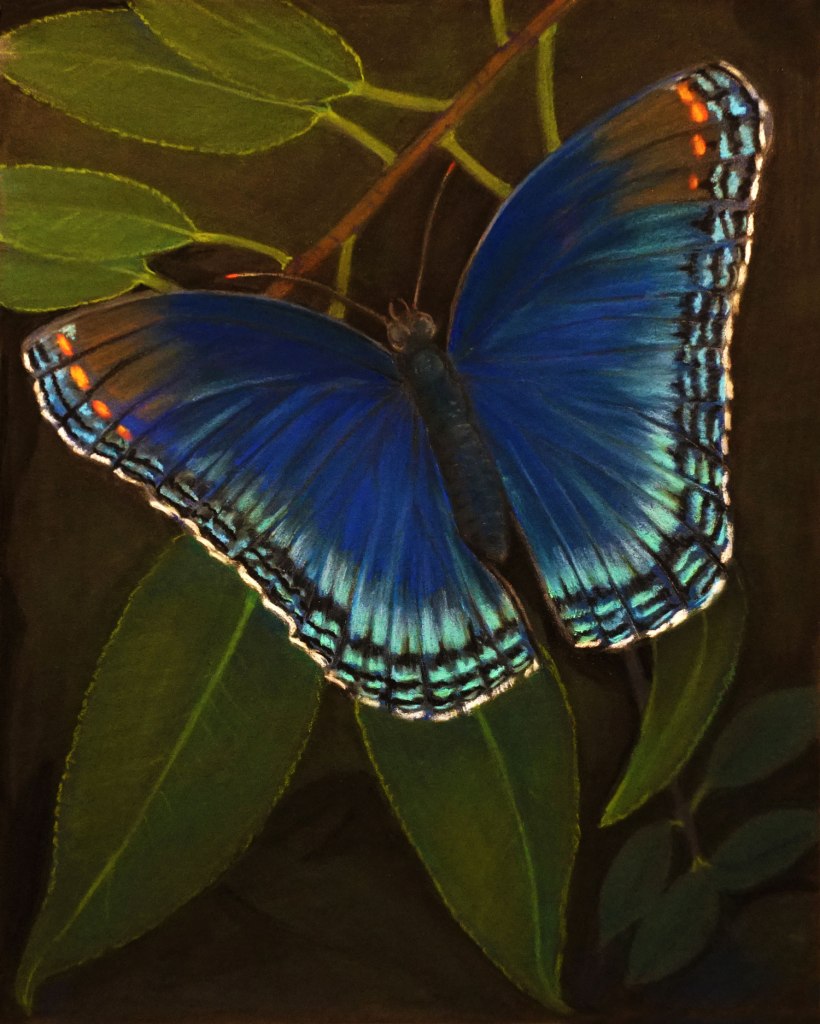
Red Spotted Purple
The Red Spotted Purple (Limenitis arthemis) though not abundant, is found in forests and wooded suburban habitats throughout the Eastern U.S. The host plant is the Wild Cherry or Black Cherry (Prunus serotine) which grows best in the high elevation mountains of North Carolina
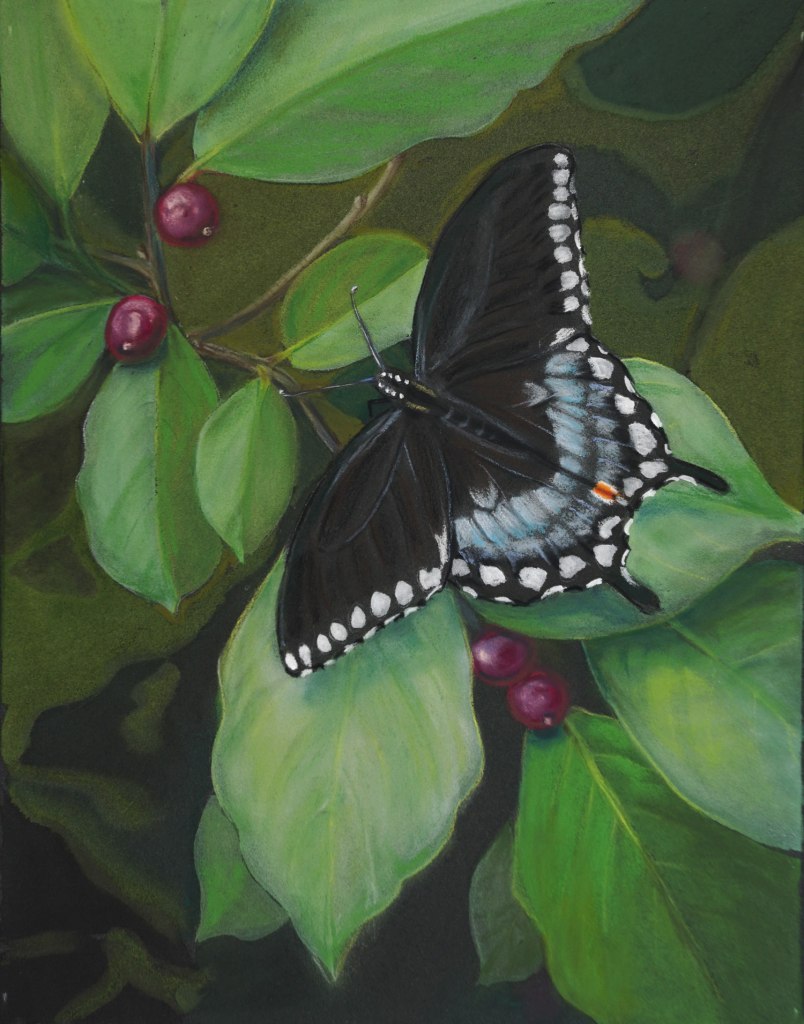
Spicebush Swallowtail
Spicebush Swallowtails (Papilio troilus) lay eggs exclusively on plants in the Lauraceae family, which includes Spicebush (Lindera bezoin); Sassafras (Sassafras albidum); Sweet Bay (Magnolia virginiana); and Tulip Tree (Liriodendron tulipfera).
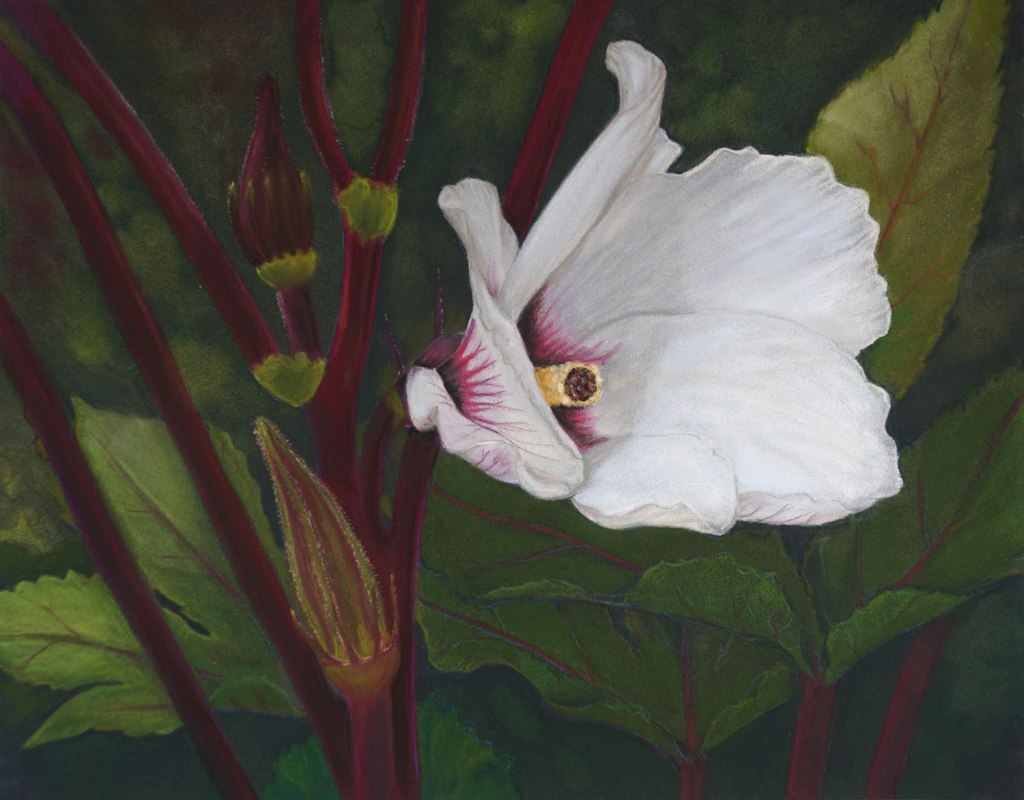
Burgundy Okra
Burgundy Okra (Abelmoschus esculentus), is one of my favorite okras to grow in my garden (I also grow Whidby White, and Heavy Hitter). It is very ornamental with the hibiscus-like flowers and rich burgundy stems, veins, and pods (which turn green when cooked).
Harvest 2023
September is usually time for an abundance in my garden. Canning, freezing, and eating keep me busy until the Fall freeze.
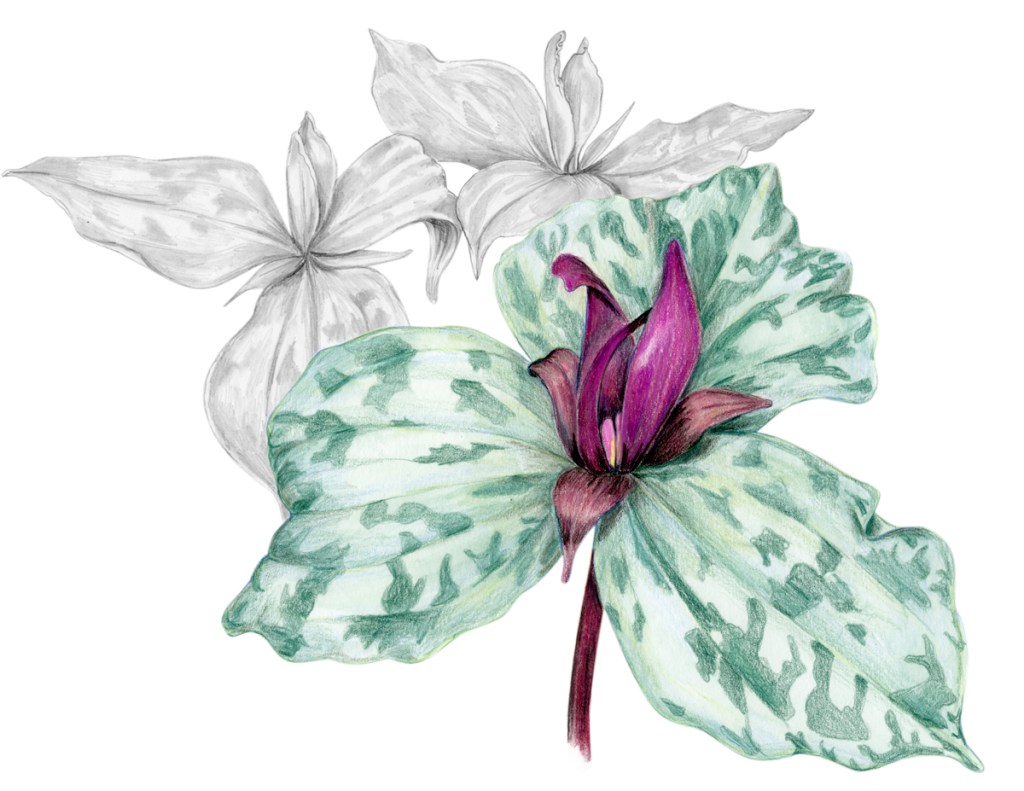
Trilliums
These beautiful wildflowers appear around March in the Appalachian mountain region.
 Linda Cook